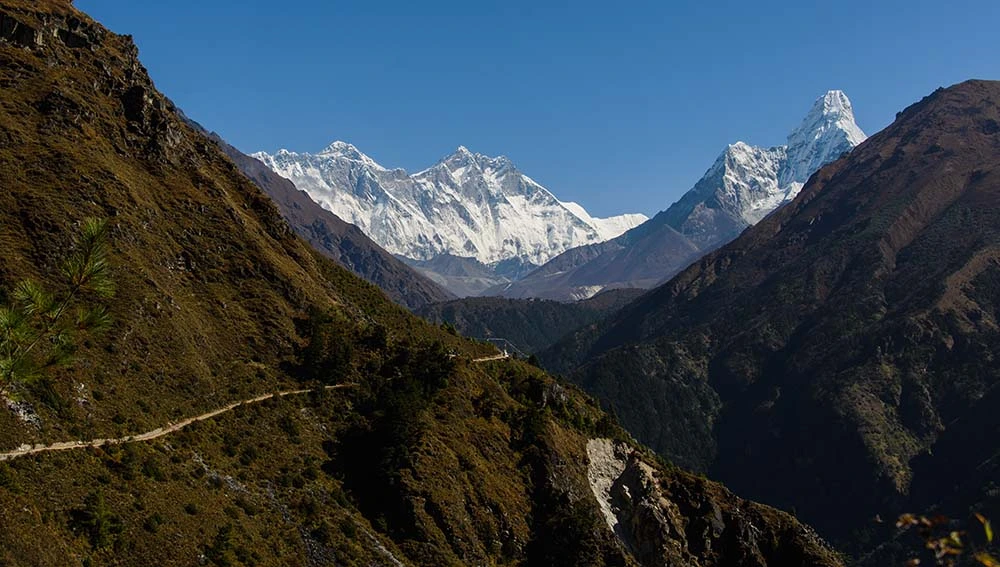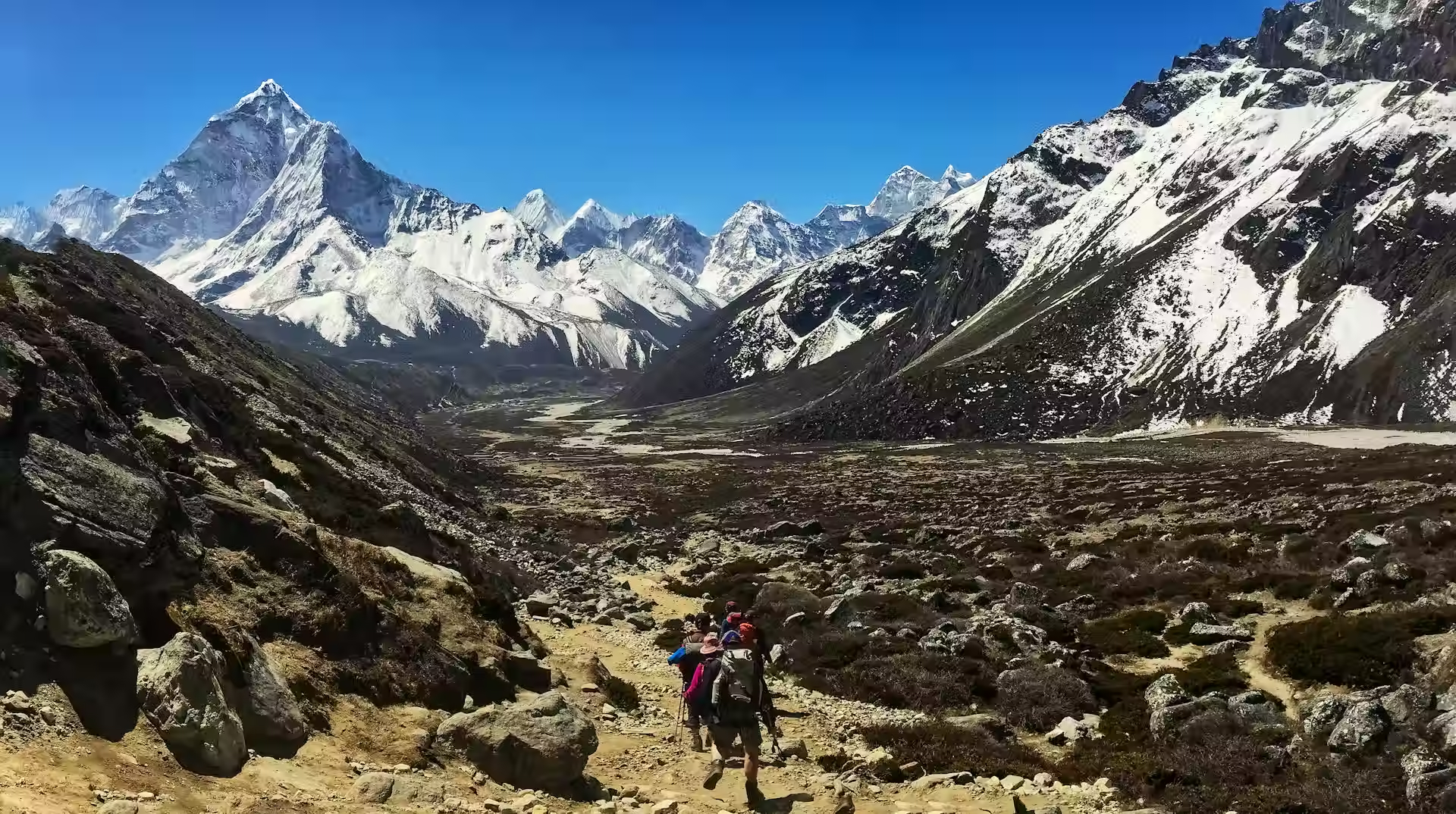
The Gokyo and Renjo La Pass Trek is one of the most rewarding trekking adventures in Nepal’s Everest region. This spectacular route combines dramatic mountain landscapes, turquoise glacial lakes, ancient Sherpa villages, massive glaciers, and one of the region’s most exciting high-altitude passes.
Unlike the classic Everest Base Camp route, the Gokyo and Renjo La Pass Trek takes you away from the busier trails and into the quieter Gokyo Valley. Along the way, you will cross changing landscapes of green pastures, rocky ridges, narrow valleys, steep mountain trails, and high-altitude terrain.
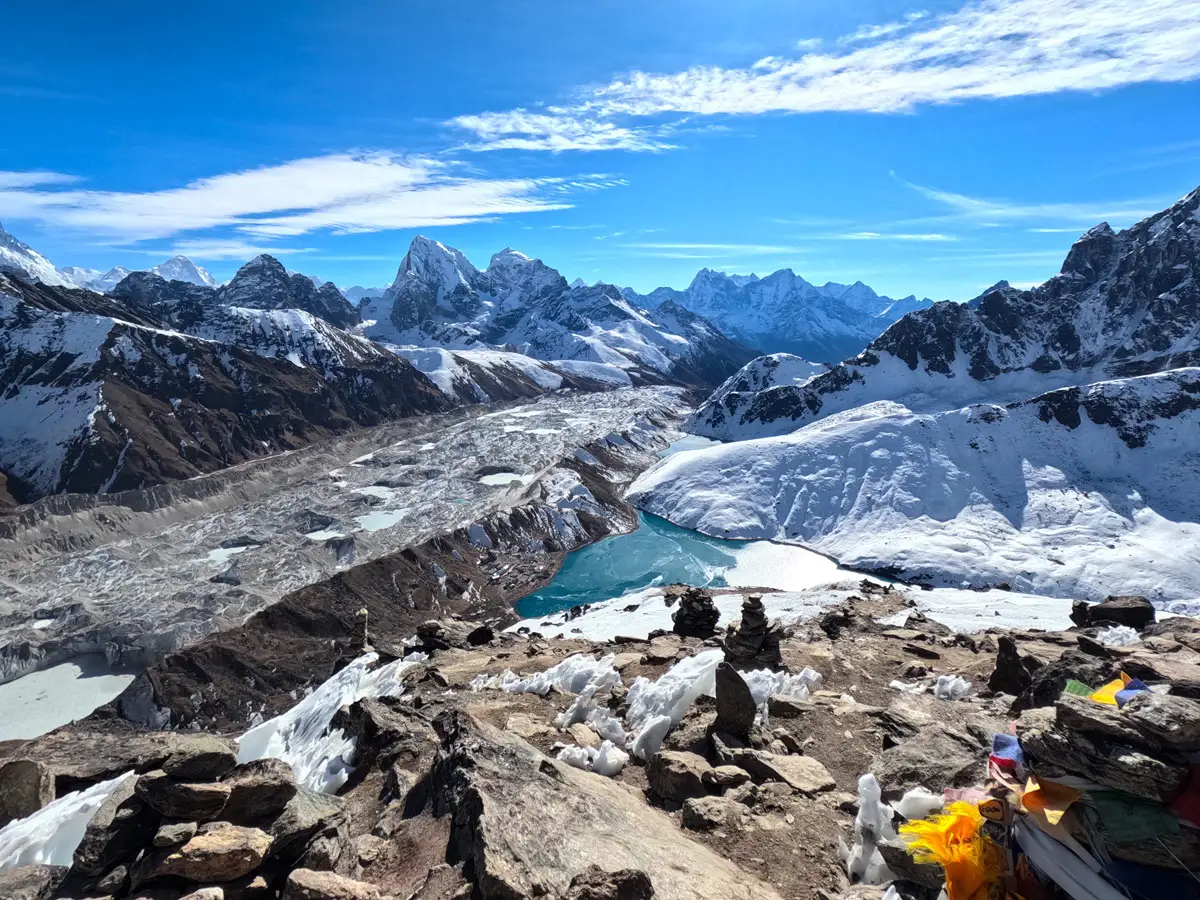
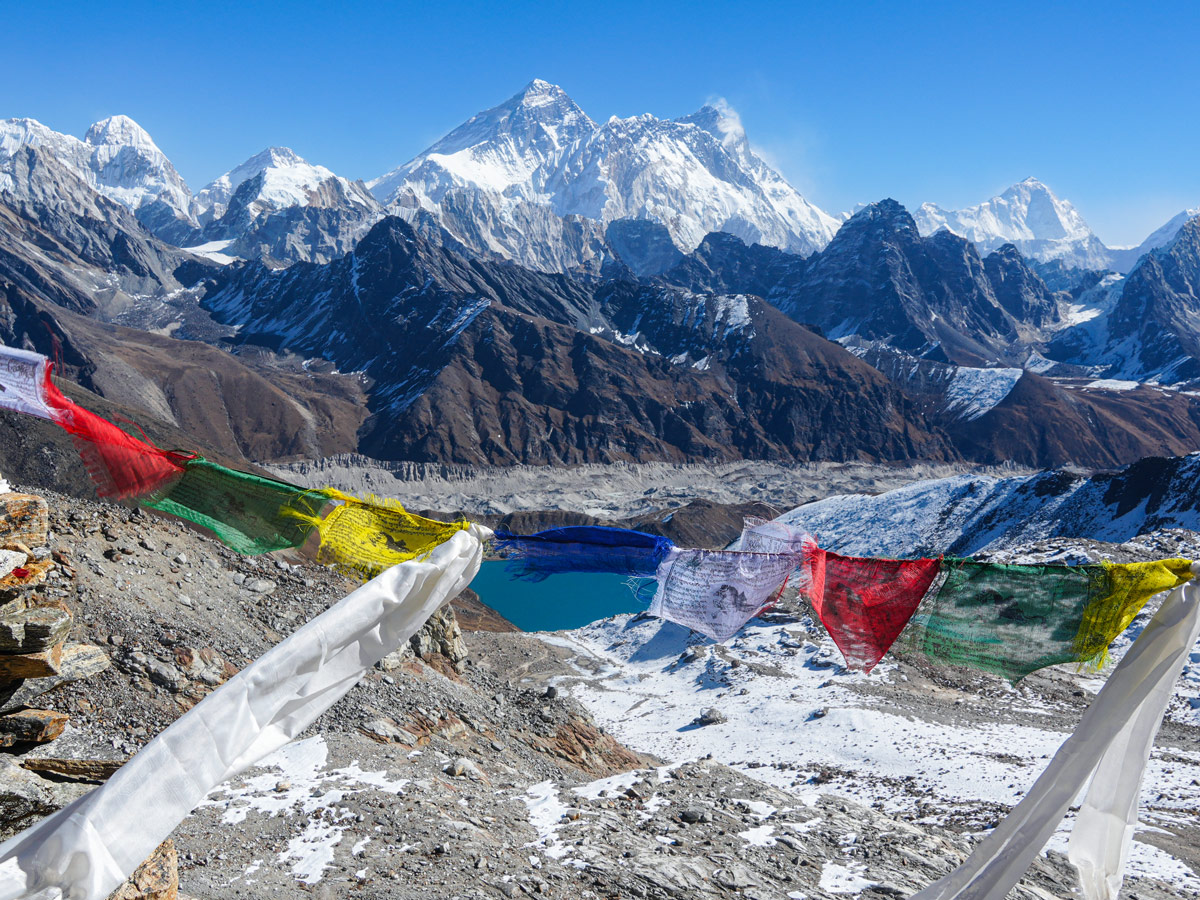
The trek also gives you the opportunity to enjoy spectacular views of some of the world’s highest mountains. From Gokyo Ri, you can see Mount Everest, Cho Oyu, Lhotse, and Makalu from a single viewpoint. The panorama of the surrounding peaks, Ngozumpa Glacier, and Gokyo Valley makes the climb to Gokyo Ri one of the highlights of the journey.
The Gokyo Valley itself is equally impressive. Traditional stone houses and mountain meadows surround the beautiful Dudh Pokhari, while the enormous Ngozumpa Glacier stretches across the landscape. As you continue toward Renjo La Pass, the scenery becomes increasingly remote and dramatic.
The Gokyo and Renjo La Pass Trek begins in Kathmandu, followed by a scenic flight to Lukla, the gateway to the Everest region. From Lukla, the real adventure begins as you walk through mountain villages, rhododendron forests, river valleys, and high-altitude landscapes toward Gokyo and Renjo La Pass.
Although the trek is physically demanding, the spectacular scenery, rich Sherpa culture, and sense of adventure make the challenge worthwhile.
Gokyo and Renjo La Pass Trek Highlights
- Enjoy a spectacular scenic flight to and from Lukla.
- Explore the traditional culture and lifestyle of Himalayan mountain communities.
- Visit the beautiful and sacred Gokyo Lakes.
- Witness the enormous Ngozumpa Glacier, the largest glacier in the Himalayas.
- Hike to Gokyo Ri at 5,360 meters (17,585 feet) for breathtaking Himalayan views.
- Enjoy panoramic views of the Gokyo Valley, Ngozumpa Glacier, and Khumbu Himalayas.
- Cross the challenging Renjo La Pass at 5,360 meters (17,585 feet).
- See Mount Everest, Lhotse, Makalu, Cho Oyu, and other Himalayan peaks.
- Explore the historic Sherpa village of Thame.
- Experience peaceful and remote Himalayan landscapes away from the busier Everest Base Camp trail.
- Spend memorable nights in traditional mountain teahouses.
What Makes the Gokyo and Renjo La Pass Trek Different?
The Gokyo and Renjo La Pass Trek offers a different experience from the classic Everest Base Camp route. While many trekkers follow the main trail toward Everest Base Camp, this route turns toward the quieter Gokyo Valley after Namche Bazaar.
The quieter trails, dramatic landscapes, high-altitude lakes, and Renjo La crossing give this trek a more adventurous and remote character.
Gokyo Lakes
The Gokyo Valley is home to a chain of six sacred glacial lakes located above 4,700 meters. Their colors can range from deep emerald to pale turquoise depending on the light and season.
These peaceful lakes form one of the most beautiful landscapes in the Everest region.
Gokyo Ri
At 5,360 meters, Gokyo Ri provides one of the finest viewpoints in the Everest region. From the summit, you can enjoy views of Everest, Lhotse, Makalu, and Cho Oyu, along with the enormous Ngozumpa Glacier below.
Many trekkers consider the panorama from Gokyo Ri even more impressive than the view from Kala Patthar.
Renjo La Pass
The Renjo La Pass stands at 5,360 meters and represents one of the most exciting parts of the trek. The climb from Gokyo is steep, but the reward is an incredible panorama of the surrounding Himalayan range.
After crossing the pass, the trail descends toward the Bhote Kosi Valley and the village of Lungden. Compared with the main Everest Base Camp trail, this section feels considerably quieter and more remote.
Thame Village
Thame is a traditional Sherpa village with a strong mountaineering history. Several famous Himalayan climbers have connections to the area.
The route through Thame also adds an important cultural element to the trek, allowing you to experience a quieter side of the Khumbu region.
Quieter Trails
From Dole onward, the number of trekkers decreases significantly. The Gokyo Valley offers a peaceful atmosphere and a sense of wilderness that you may not experience on the busier Everest Base Camp corridor.
How High Is the Gokyo and Renjo La Pass Trek?
The trek begins in Lukla at 2,840 meters (9,318 feet) and gradually climbs into the Khumbu region.
One of the first major stops is Namche Bazaar at 3,440 meters (11,286 feet). From Namche, the trail heads northwest toward Dole at 4,200 meters and Machhermo at 4,470 meters before reaching Gokyo Village at approximately 4,790 meters.
The trek reaches its two highest points on consecutive days.
You climb Gokyo Ri at 5,360 meters before returning to Gokyo for the night. The following day, you cross Renjo La Pass at the same altitude of 5,360 meters before descending toward Lungden at 4,368 meters.
From Day 5 onward, you spend four consecutive nights above 4,000 meters before crossing the pass. This extended exposure to high altitude makes acclimatization an important part of the itinerary.
The acclimatization days in Namche and Gokyo allow your body to gradually adjust to the increasing elevation.
Where Will You Stay During the Trek?
Accommodation on the Gokyo and Renjo La Pass Trek combines comfortable hotels in Kathmandu with traditional mountain teahouses along the trekking route.
Hotels in Kathmandu
You will spend two nights in a 3-star hotel in Thamel, Kathmandu. Typical hotel options include Hotel Thamel House, Surya Heritage Hotel, and Hotel Jampa.
Rooms generally include twin or double beds, private bathrooms, television, and breakfast.
Thamel also provides convenient access to trekking shops, restaurants, currency exchange services, and other facilities you may need before or after the trek.
Single rooms and 4- or 5-star hotel upgrades are available on request.
Teahouses Along the Trail
You will spend eleven nights in mountain teahouses. These locally operated lodges form an important part of Himalayan trekking culture.
At lower and mid-altitude locations such as Lukla, Phakding, Namche, and Dole, teahouses generally offer comfortable rooms, and attached bathrooms may be available for an additional fee.
Accommodation becomes more basic at higher elevations such as Machhermo, Gokyo, and Lungden. Rooms are usually twin-sharing, while single rooms may be available for an additional fee.
The teahouses may not provide luxury, but they offer a warm and welcoming atmosphere. The communal dining rooms often become the social center of the evening, where trekkers gather around a central stove, enjoy hot drinks, and share stories from the trail.
Permits Required for the Gokyo and Renjo La Pass Trek
You need three main permits for this trek:
- Trekking Information Management System (TIMS) Permit
- Sagarmatha National Park Permit
- Khumbu Pasang Lhamu Rural Municipality Entrance Card
The Sagarmatha National Park Permit and Khumbu Pasang Lhamu entrance card are checked at official checkpoints along the route. Keep your documents easily accessible in your daypack.
According to the package information, these permits are arranged and included in the trek package.
How Safe Is the Gokyo and Renjo La Pass Trek?
The Gokyo and Renjo La Pass Trek follows an established trekking route that thousands of visitors complete safely. However, the high altitude, changing weather, remote terrain, and 5,360-meter Renjo La Pass require proper preparation.
The main challenges include altitude-related illness and rapidly changing mountain weather.
Walking at a controlled pace, following your acclimatization schedule, staying hydrated, and listening to your guide can help reduce unnecessary risks.
Safety Measures
The trekking team follows several safety measures:
- Government-certified guides trained in first aid and altitude sickness recognition.
- Guides carry pulse oximeters to monitor blood oxygen levels.
- A guide-to-trekker ratio of approximately 1:8 for small groups.
- An additional guide for larger groups.
- One porter for every two clients.
- Trekking staff are insured.
- 24/7 emergency support throughout the trek.
- Supplemental oxygen available at an additional cost if required.
- Travel insurance covering emergency helicopter evacuation from high altitude is mandatory.
Altitude Sickness on the Gokyo and Renjo La Pass Trek
Altitude sickness represents the biggest challenge on this trek. Your physical fitness does not completely protect you from altitude sickness. Even experienced hikers can develop symptoms if they ascend too quickly.
The best protection comes from gradual acclimatization, proper hydration, controlled walking speed, and paying attention to your body.
The itinerary includes two acclimatization days.
The first takes place in Namche Bazaar, where you hike toward the Everest View Hotel at 3,880 meters before returning to Namche to sleep at a lower elevation.
The second acclimatization day takes place in Gokyo. You climb Gokyo Ri to 5,360 meters and then return to Gokyo Village at 4,790 meters to sleep.
This approach allows you to climb high during the day while sleeping at a lower altitude.
Common Symptoms of Altitude Sickness
Watch for symptoms such as:
- Persistent headache
- Nausea or loss of appetite
- Unusual fatigue or weakness
- Dizziness
- Poor coordination
- Difficulty sleeping
- Breathlessness while resting
If you experience these symptoms, inform your guide immediately.
The most reliable response to serious altitude sickness is descent. Your guide can help assess your condition and determine the appropriate action.
Before traveling, consult your doctor about whether preventive medication such as Acetazolamide (Diamox) is appropriate for you.
The itinerary recommends drinking approximately 3 to 4 liters of water per day, avoiding alcohol above 3,500 meters, and maintaining a steady pace throughout the trek.
Best Time for the Gokyo and Renjo La Pass Trek
You can undertake the Gokyo and Renjo La Pass Trek throughout the year, but weather and trail conditions vary significantly between seasons.
The two most recommended trekking seasons are autumn and spring.
Autumn: Late September to Late November
Autumn is one of the best times to complete the trek. The monsoon rains have usually cleared the atmosphere, creating excellent mountain visibility.
Days are generally sunny and crisp, while nights at Gokyo can become extremely cold.
October attracts many trekkers, particularly on the Lukla-to-Namche section, although the Gokyo Valley remains quieter than the main Everest Base Camp route.
Renjo La Pass is generally more accessible in September and October, while early November crossings can also be possible when conditions remain favorable.
Spring: March to Late May
Spring is another excellent trekking season.
The lower trails become colorful as rhododendrons bloom, especially between Lukla and Namche. Temperatures at higher elevations are generally slightly warmer than during autumn.
April and early May are particularly popular.
Clouds can build during the afternoon, so starting your hikes early can improve your chances of enjoying clear mountain views.
Monsoon: July to Mid-September
The monsoon season brings rainfall to lower elevations and can reduce mountain visibility.
However, the Gokyo Valley lies partly in a rain-shadow area and can receive less precipitation than some lower regions.
The trails become quieter during this period, and the landscapes turn lush and green.
Fresh snow can make Renjo La Pass difficult or dangerous, so local weather conditions and your guide’s experience become especially important.
Winter: December to February
Winter trekking requires proper equipment and experience with severe cold.
Temperatures around Renjo La Pass can fall significantly, and heavy snowfall may temporarily block the pass.
Teahouses remain open, although some may operate with reduced staff and fewer menu options.
On clear winter days, however, the dry atmosphere can provide exceptionally sharp mountain views.
If you plan a winter trek, bring appropriate cold-weather equipment and a sleeping bag rated for very low temperatures.
Getting to the Trek: Flying to Lukla
The Gokyo and Renjo La Pass Trek begins and ends in Lukla, which you reach by a short mountain flight.
Tenzing-Hillary Airport in Lukla sits at 2,840 meters (9,318 feet) and is famous for its dramatic location in the Himalayas.
The airport sits in a narrow mountain valley, and weather conditions can change quickly.
Flights generally use small Twin Otter or Dornier aircraft and typically carry around 15 to 18 passengers.
Kathmandu to Lukla Flights
During January, February, June, July, August, September, and December, flights generally operate directly from Tribhuvan International Airport in Kathmandu.
The flight takes approximately 35 minutes.
During the peak trekking seasons of March, April, May, October, and November, flights may operate from Ramechhap/Manthali Airport instead.
Ramechhap is approximately 130 km east of Kathmandu. Travelers generally leave Kathmandu very early in the morning, drive for around 5 to 6 hours, and then take a flight of approximately 20 minutes to Lukla.
Because mountain weather can cause flight delays, it is important to keep one or two buffer days in your itinerary if your international flight schedule is tight.
Luggage Limits on Lukla Flights
The stated luggage allowance for Lukla flights is 15 kg per person, including your main duffel bag and daypack.
The limit includes:
- Duffel bag: approximately 10 kg
- Daypack: approximately 5 kg
The airline can strictly enforce the weight limit. Excess baggage may sometimes cost approximately USD 2 to 5 per kilogram, although this is not guaranteed.
Packing within the permitted weight from the beginning helps you avoid unnecessary delays and additional costs.
Your porter carries your duffel bag during the trek, while you carry your daily essentials in your daypack.
Travel Insurance for the Gokyo and Renjo La Pass Trek
Travel insurance is an essential requirement for this trek.
Your policy should specifically cover:
- High-altitude trekking up to at least 6,000 meters
- Emergency medical treatment
- Helicopter evacuation
- Hospitalization
- Trip cancellation
- Trip curtailment
- Personal liability
Do not assume that a standard travel insurance policy automatically covers high-altitude trekking.
Before purchasing a policy, check the activity exclusions and confirm that trekking to 5,360 meters at Renjo La Pass is covered.
The original package information lists providers that have been used by previous clients, including World Nomads, Tugu, United Health Care, Blue Cross, Fast Cover, Allianz, Ergo, Europe Assistance, ICICI Lombard, and others.
Insurance policies and coverage conditions can change, so always verify the details directly with your chosen provider before purchasing.
What Will You Eat on the Gokyo and Renjo La Pass Trek?
Food is an important part of the trekking experience, and teahouses along the route offer a surprisingly wide selection of meals.
Dal Bhat
Dal bhat remains the staple meal for trekkers in Nepal.
It typically includes steamed rice, lentil soup, vegetable curry, and pickles. The meal provides plenty of carbohydrates and calories to fuel long trekking days.
Many teahouses offer additional servings, making dal bhat a reliable option throughout the trek.
Breakfast
Breakfast options usually include:
- Eggs
- Porridge
- Tibetan bread
- Muesli
- Chapati
- Toast
- Jam and butter
- Tea
- Coffee
- Hot lemon
- Hot chocolate
A substantial breakfast can help provide the energy you need for a long day on the trail.
Lunch and Dinner
Teahouse menus commonly include:
- Noodle soup
- Fried rice
- Vegetable fried noodles
- Pasta
- Pizza
- Sherpa stew
- Potato dishes
- Momos
- Soup
- Garlic soup
Garlic soup is particularly popular among trekkers at higher elevations.
Meat Above Namche
The package guidance recommends avoiding meat after Namche Bazaar because transporting and refrigerating meat becomes increasingly difficult at higher elevations.
Vegetarian meals are widely available and can provide plenty of energy during the trek.
Snacks
Teahouses sell snacks such as chocolate, biscuits, canned drinks, and other packaged foods.
Prices generally increase as you gain altitude, so carrying protein bars, trail mix, nuts, and dried fruit from Kathmandu can help you maintain your energy while controlling costs.
How Difficult Is the Gokyo and Renjo La Pass Trek?
The Gokyo and Renjo La Pass Trek is generally moderate to strenuous.
It is more demanding than the standard Everest Base Camp trek because you spend several consecutive nights above 4,000 meters and cross the 5,360-meter Renjo La Pass.
Daily walking time varies depending on the route and day. Some shorter sections take around three hours, while the Renjo La crossing can require 7 to 8 hours of walking.
The terrain includes:
- Stone-paved trails
- Boulder sections
- Moraine ridges
- Rocky slopes
- Open mountain hillsides
- Steep ascents and descents
You do not need technical climbing skills for the standard route, but you need good trekking boots, trekking poles, stamina, and proper preparation.
The altitude makes the Renjo La crossing particularly challenging. At 5,360 meters, even normal walking requires considerably more effort than it does at lower elevations.
The acclimatization days in Namche and Gokyo play an important role in preparing your body for the high-altitude sections.
Can Beginners Do the Gokyo and Renjo La Pass Trek?
Yes, beginners can complete the Gokyo and Renjo La Pass Trek with proper preparation, but it is not an introductory-level trek.
The biggest challenge for beginners is usually the altitude rather than technical terrain.
Before arriving in Nepal, you should ideally be comfortable walking for 5 to 6 hours with a 5 to 8 kg daypack on hilly terrain.
If you currently cannot manage that level of activity, begin preparing two to three months before your trip.
Regular hiking, cardio workouts, and leg-strength exercises can significantly improve your endurance.
Beginners should also avoid rushing during the first few days. Give your body enough time to adjust to the increasing altitude and follow your guide’s pacing recommendations.
Training for the Gokyo and Renjo La Pass Trek
Start your training at least two months before departure.
The goal is to make your body comfortable with long days of walking on uneven and uphill terrain.
Hiking with a loaded daypack provides some of the best preparation. If you do not have access to hills, you can use treadmill incline walking, stair climbing, cycling, or similar exercises.
A useful weekly training routine can include:
- Two or three cardio sessions lasting 45 to 60 minutes.
- One long weekend hike lasting 4 to 6 hours with a 5 to 7 kg pack.
- Squats, lunges, step-ups, and calf raises for leg strength.
- Yoga or stretching for flexibility and mobility.
During the final three weeks before departure, focus on maintaining your fitness rather than dramatically increasing your training volume.
Arrive in Kathmandu rested and healthy so your body can handle the demands of the trek.
Gokyo and Renjo La Pass Trek Cost for 2026 and 2027
The trek price varies according to group size. Larger groups can share fixed costs such as guiding, logistics, and permits among more participants.
| Group Size | Price Per Person |
|---|---|
| 1 person | USD 1,750 |
| 2–3 people | USD 1,550 |
| 4–9 people | USD 1,500 |
| 10–14 people | USD 1,430 |
The package includes:
- Domestic flights between Kathmandu/Ramechhap and Lukla, as applicable
- Sagarmatha National Park Permit
- TIMS Permit
- Khumbu Pasang Lhamu entrance card
- Accommodation during the trek
- Breakfast, lunch, and dinner during the trek
- Certified English-speaking guide
- One porter for every two clients
Groups of 15 or more can request custom pricing and group arrangements.
When comparing trekking packages, always check what the price includes. A cheaper headline price may exclude permits, domestic flights, accommodation, or porter services and can ultimately cost more.
Internet and Wi-Fi on the Gokyo and Renjo La Pass Trek
Internet connectivity in the Everest region is better than many trekkers expect.
Airlink, also marketed as Everest Link, provides Wi-Fi at many teahouses along the route. Connectivity is generally better in lower and mid-altitude villages and can become less reliable above 4,500 meters.
The package information lists approximate Airlink prices of:
- 24-hour package: NPR 700
- 48-hour package: NPR 1,200
If you need reliable internet for work, do not expect continuous connectivity throughout the trek.
A local Nepali SIM card can provide another option. You can purchase a SIM card and data package from providers such as Ncell or Nepal Telecom in Kathmandu.
Mobile coverage is available in many villages up to Namche and intermittently at higher elevations.
Charging Your Devices
Most teahouses in the Khumbu use solar power.
Charging is available at many stops, but it usually comes at an additional cost. Expect to pay approximately USD 1 to 5 per device depending on the location.
Availability can depend on weather and solar power generation.
To keep your devices charged:
- Carry a power bank with at least 20,000 mAh capacity.
- Fully charge your devices in Kathmandu and Namche before heading higher.
- Keep phones and cameras inside your jacket at night because cold temperatures drain batteries quickly.
- Carry both Type C and Type D adapters.
- Use solar chargers only as a backup because they can charge slowly in cold and high-altitude conditions.
Tipping Your Guide and Porter
Tipping is not mandatory, but it is common in Himalayan trekking culture and represents an important part of income for guides and porters.
A commonly used guideline is around 10% of the total trek cost, divided approximately 60% for the guide and 40% for the porter.
You can give the tip in Nepali rupees or US dollars, usually on the final evening in Lukla or before flying back to Kathmandu.
If your guide and porter provide exceptional service, you can choose to tip more.
How Far Do You Walk on the Gokyo and Renjo La Pass Trek?
The total trekking distance is approximately 120 to 130 km (75 to 80 miles) over around 11 days of walking.
The route travels from Lukla through the Gokyo Valley and returns through Renjo La Pass, Lungden, Thame, and Namche.
The itinerary also includes two acclimatization days:
- Namche Bazaar with a hike toward Everest View Hotel
- Gokyo with the ascent of Gokyo Ri
Daily walking distances vary considerably. Some days cover around 10 km, while demanding days can reach approximately 20 km.
The Renjo La crossing represents one of the toughest sections because it combines long-distance walking with high-altitude terrain.
What Should You Pack for the Gokyo and Renjo La Pass Trek?
Packing correctly can make a significant difference to your comfort and safety.
The following checklist provides a useful starting point. You may need additional warm layers during winter.
A 75-liter duffel bag is provided for the trek and is given to you during the pre-trip meeting in Kathmandu. The duffel bag is yours to keep.
You can also rent a sleeping bag and down jacket in Kathmandu for an additional USD 35 each.
General Gear and Equipment
- Four-season sleeping bag
- Puffy down jacket
- 35–45-liter daypack with rain cover
- Sleeping bag liner
Head and Upper-Body Gear
- Sun hat or cap
- Knitted hat or beanie
- Headlamp
- Sunglasses
- Scarf, neck gaiter, or Buff
Torso Clothing
- Technical fabric base layers
- Two short-sleeve technical shirts
- Two long-sleeve technical shirts
- Waterproof and windproof shell
- Fleece jacket or pullover
Lower-Body Clothing
- Technical fabric base layer
- Two pairs of hiking pants
- Comfortable pants for teahouses
- Waterproof and windproof shell pants
- Hiking shorts
Handwear
- Wool or technical-fabric liner gloves
- Insulated hard-shell outer gloves
Footwear
- Warm wool or technical-fabric socks
- Hiking socks
- Optional liner socks
- Waterproof trekking boots
- Ice cleats or microspikes
- Casual shoes
- Gaiters
Undergarments
- Quick-drying technical underwear
- Sports bras
- Pajamas or sleeping clothes
The amount of clothing you bring can vary according to your preferences and the season.
First Aid and Personal Medication
Guides carry first-aid supplies and medications, but carrying your own personal kit is strongly recommended.
Consider packing:
- Sunscreen
- Lip balm
- Personal ointment
- Personal medications
- Basic first-aid supplies
Other Essentials
- Passport
- Extra passport-sized photos
- Reusable water bottle
- Toiletry kit
- Water purification tablets or UV purifier
- Hydration bladder
- Towel
- Pillowcase
- Two rolls of toilet paper
- High-protein snacks
- Waterproof or dry bags
- Airline ticket copies
- Earplugs
- Trekking poles
Optional Items
If you have time in Nepal, you can purchase additional trekking supplies in Kathmandu.
Thamel has many shops selling trekking equipment at a range of prices.
Optional items include:
- Power bank or spare batteries
- Camera
- Mobile phone
- Books or cards
- Binoculars
- Whistle
- Thermos
Important Luggage Information
The trekking package provides a free duffel bag and baseball cap during the pre-trip meeting in Kathmandu.
The duffel bag will be used to transport your trekking equipment.
One porter is assigned to every two participants. The recommended duffel weight is approximately 10 kg (22 lbs).
You should carry your daily necessities in your own daypack. These may include:
- Cash
- Passport and important documents
- Water bottle or hydration bladder
- Camera
- Toiletries
- Sunscreen
- Notebook
- Extra clothing
You can leave non-trekking luggage at your hotel in Kathmandu.
The stated Kathmandu-to-Lukla flight luggage allowance is 15 kg per person, including approximately 10 kg in the duffel and 5 kg in the daypack.
A hooded down jacket is essential above 4,000 meters. You can rent one for USD 35. The stated replacement charge is USD 200 if the rented jacket is lost or damaged.
You can also rent a four-season sleeping bag for USD 35, with a stated USD 200 replacement charge for loss or damage.
When choosing clothing, remember that some tight or form-fitting clothing may not be culturally appropriate in local communities. If you choose to wear such clothing for comfort, consider layering something over it.
Extending Your Nepal Trip
Nepal offers much more than the Himalayan trekking experience.
If you have extra time before or after your Gokyo and Renjo La Pass Trek, consider extending your trip to explore other parts of the country.
Kathmandu Valley Cultural Tour
Explore major cultural landmarks such as:
- Pashupatinath Temple
- Boudhanath Stupa
- Swayambhunath
- Bhaktapur Durbar Square
- Patan Durbar Square
A full day can give you an introduction to the Kathmandu Valley, although there is much more to explore.
Chitwan National Park
Spend two or three days in Chitwan National Park for a completely different experience.
Jungle activities can offer opportunities to see rhinos, leopards, and potentially tigers.
Pokhara and Paragliding
Pokhara is Nepal’s popular lakeside adventure destination.
You can reach Pokhara by a short flight or a longer road journey from Kathmandu. Paragliding over Phewa Lake with views toward the Annapurna range is one of the region’s most popular adventure experiences.
Trishuli River Rafting
A half-day or full-day rafting trip on the Trishuli River provides another adventure option. The river is also conveniently located along the route between Kathmandu and Pokhara.
Bardia National Park
Bardia National Park in western Nepal provides a quieter alternative to Chitwan.
It offers a genuine wilderness experience and opportunities for wildlife encounters in one of Nepal’s less-visited national parks.
Final Thoughts on the Gokyo and Renjo La Pass Trek
The Gokyo and Renjo La Pass Trek combines some of the most spectacular scenery and challenging terrain in the Everest region.
From the turquoise Gokyo Lakes and massive Ngozumpa Glacier to the panoramic summit of Gokyo Ri and the high-altitude crossing of Renjo La Pass, every section offers something different.
The trek demands good preparation because you spend extended periods above 4,000 meters and reach an altitude of 5,360 meters. However, with proper acclimatization, appropriate training, suitable equipment, and an experienced trekking team, the route can become one of the most memorable Himalayan adventures.
For trekkers who want to experience the Everest region while avoiding some of the crowds on the classic Everest Base Camp route, the Gokyo and Renjo La Pass Trek offers an excellent alternative.
The combination of high mountain passes, sacred lakes, glaciers, Sherpa culture, remote villages, and breathtaking Himalayan views makes this trek a truly unforgettable journey through the Khumbu.
FAQs
How difficult is the Gokyo and Renjo La Pass Trek?
The trek is graded moderate to strenuous. The high altitude, several days above 4,000 meters, and 5,360-meter Renjo La Pass make it more challenging than many standard trekking routes.
How high is Renjo La Pass?
Renjo La Pass stands at 5,360 meters (17,585 feet) above sea level.
How much does the Gokyo and Renjo La Pass Trek cost?
For 2026/27, the listed price ranges from USD 1,430 to USD 1,750 per person, depending on group size.
What is the best time to do the Gokyo and Renjo La Pass Trek?
Autumn from late September to late November and spring from March to late May are the recommended seasons. October, April, and early May generally offer particularly favorable trekking conditions.
Do I need permits for the Gokyo and Renjo La Pass Trek?
Yes. The trek requires a TIMS Permit, Sagarmatha National Park Permit, and Khumbu Pasang Lhamu Rural Municipality Entrance Card.